Resilience Amidst Crisis: A Commentary on Typhoon Bavi’s Impact on Northern China
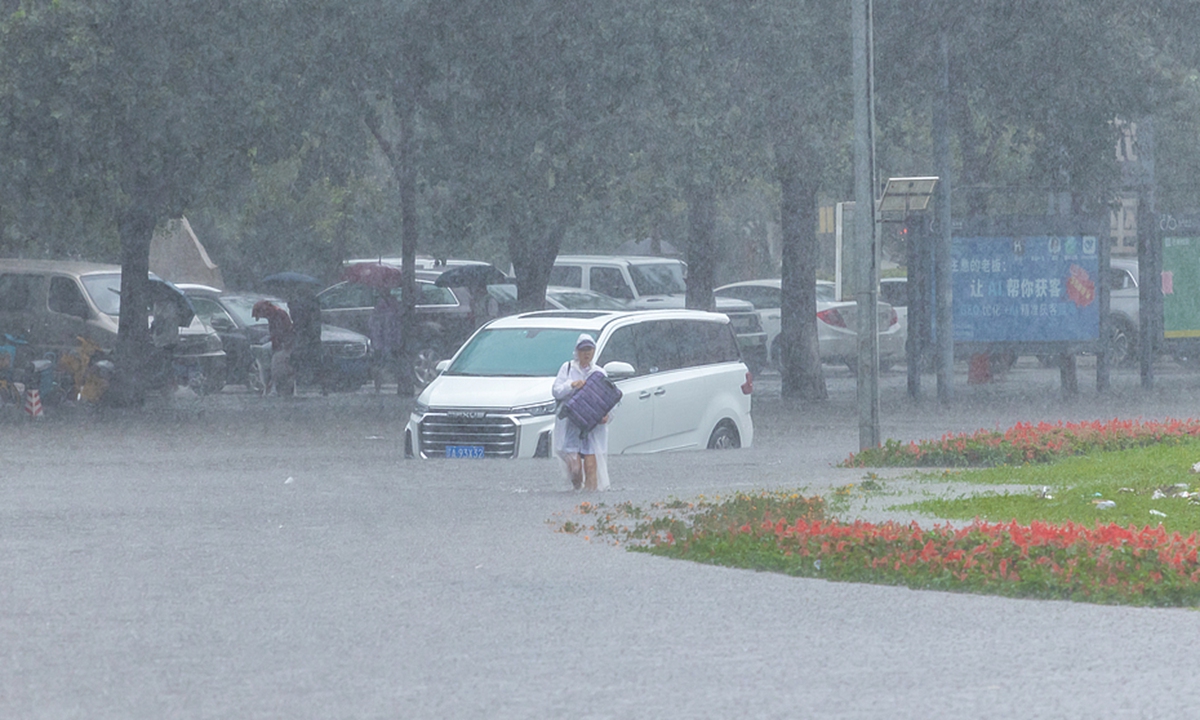
The recent surge of Typhoon Bavi across Northeast China, prompting unprecedented emergency measures in Liaoning and Jilin provinces, serves as a stark reminder of the escalating intensity and unpredictability of extreme weather events. While the storm has gradually weakened into a tropical storm since its initial landfall on the eastern coast, the operational challenges it has triggered—from mass evacuations of over 171,412 residents in Liaoning alone to the complete suspension of construction and school activities—underscore a critical point: our infrastructure and emergency response systems are being tested as never before. As highlighted in coverage by People's Daily, the ability of local authorities to swiftly transition to high-level flood emergency responses is no longer just a procedural necessity; it is a fundamental component of public safety in an era of climate volatility.
What makes this situation particularly telling is the scale of the response. With cities like Shenyang elevating to a Level I flood emergency—the highest tier—the decision to move government agencies to work-from-home models and shutter non-essential markets is a clear signal of a prioritize-safety-first strategy. The logistical feat of relocating tens of thousands of people in Jilin and Liaoning, often in complex terrain where flash floods and geological hazards pose constant threats, highlights the sheer intensity of the storm’s rainfall. Statistically, the impact is immense: hundreds of thousands of people have been displaced across affected provinces, and the strain on flood control resources remains high as water levels in multiple rivers continue to rise significantly.
Beyond the immediate disaster response, there is a secondary battle being fought: the fight against misinformation. The Ministry of Public Security’s recent crackdown on individuals fabricating flood-related rumors—penalizing 25 cases of deceptive online content—is an essential, if unfortunate, necessity. In times of crisis, the spread of fake footage and exaggerated reports creates unnecessary panic, depletes public trust, and can even hinder rescue operations. It is a vital reminder that in our digitally connected world, the "digital infrastructure" of information integrity is just as critical as the physical dikes and dams protecting our cities.
Looking toward the future, the solution must be twofold: continuing to enhance physical infrastructure like drainage and flood-containment systems, while simultaneously bolstering the "human" side of resilience. This means more localized, real-time communication networks to debunk rumors faster and more integrated, cross-provincial data sharing to predict flow rates and flash flood risks with higher precision. The efficiency of our response—measured in the speed of evacuations, the accuracy of weather alerts, and the maintenance of essential services during shutdowns—will dictate our success in mitigating the economic and human costs of these intensifying weather patterns. As we navigate this cycle, the focus must remain on adaptive management: learning from every storm to build a more robust, informed, and resilient society.
News source: https://peoplesdaily.pdnews.cn/china/er/30052644586