How Do You Find a Plywood Supplier for European Markets?
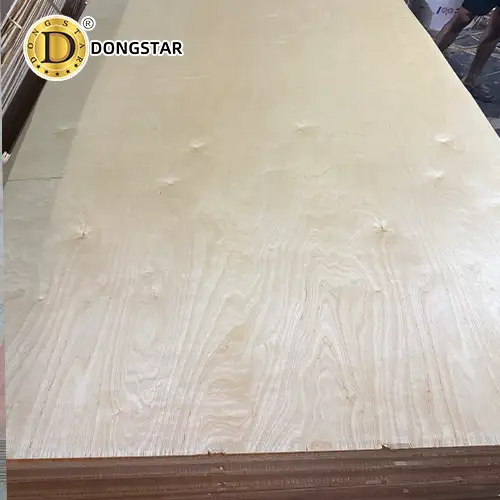
A European buyer should choose a plywood supplier by checking product specification, manufacturing control, timber origin, EUDR data, CE documentation where applicable, formaldehyde performance, bonding, moisture, thickness tolerance, packing, and shipment consistency. Plywood under CN 4412 is included in the EUDR wood-product scope, while the regulation applies from 30 December 2026 to large and medium operators and from 30 June 2027 to most micro and small operators. A useful supplier review should compare identical panel constructions, test production samples, inspect commercial orders, and calculate landed cost rather than relying on an FOB price alone.
A sourcing project should begin with the finished panel specification, not a list of factories. “18 mm plywood” is not enough information for a quotation because two 18 mm panels can use different veneer species, ply counts, adhesives, face grades, densities, sanding tolerances, and emission levels. A buyer ordering 2440 × 1220 mm furniture plywood should state nominal thickness, accepted tolerance, face and back grade, inner veneer species, glue system, moisture range, sanding requirement, and intended use before asking for prices.
Specifications also need measurable acceptance limits. For example, a buyer may ask a factory to measure 20 randomly selected sheets from one production lot at several positions per sheet and record minimum, maximum, and average thickness. This is a procurement sampling method rather than a universal European test requirement, but it gives both parties a repeatable way to discuss variation instead of using descriptions such as “good thickness control.”
Once the physical specification is fixed, timber information should be reviewed at the same level of detail. EU Regulation 2023/1115 covers wood and lists CN 4412 plywood, veneered panels, and similar laminated wood among relevant products. Buyers therefore need more than a species name printed on a quotation; they need information that can be connected to the material entering the production line.
Ask for common and scientific species names, country of harvest, supplier records, purchase documents, batch references, and the method used to connect incoming veneers with finished panels. Under the current EUDR timetable, large and medium operators enter application on 30 December 2026, while most micro and small operators follow on 30 June 2027. Micro and small operators already covered by the former EUTR timetable also fall under the 30 December 2026 date.
A supplier should be able to demonstrate that information with one real production batch. Choose a pallet number, trace it to a production date, identify the veneer or timber inputs used for that batch, and compare the result with the supporting purchasing records. A company that can explain its process verbally but cannot reproduce the records for a shipped batch leaves the importer with more verification work.
Record retention also matters. European Commission guidance on the revised EUDR framework states that operators must collect and retain specified supplier and customer information for 5 years. An importer should therefore discuss document format, batch numbering, responsible staff, and data availability before repeat orders begin, especially where several timber sources feed the same plywood construction.
Technical compliance comes next because the intended use changes what documentation is relevant. Construction plywood and furniture plywood should not be approved through the same generic certificate folder. Under the EU Construction Products Regulation framework, CE marking is connected to applicable harmonised technical specifications or a European Technical Assessment, and the manufacturer prepares the relevant declaration after the required assessment and verification procedures.
The revised Construction Products Regulation, Regulation (EU) 2024/3110, entered into force on 7 January 2026. Buyers purchasing panels for construction applications should therefore ask what technical specification covers the exact product, what performance has been assessed, which production site the documentation covers, and whether the declaration refers to the construction being quoted.
A test report should be checked line by line. Compare the manufacturer name, factory address, product description, species, thickness, adhesive system, test method, test date, result, laboratory identity, and report number. A report for 12 mm poplar plywood does not automatically describe an 18 mm mixed-species panel simply because both products are sold under the same commercial family.
The same approach applies to formaldehyde performance. For furniture, cabinetry, interior fit-out, flooring components, and other indoor uses, the buyer should request the applicable emission classification and test method rather than accepting terms such as “eco glue” or “low emission.” Reports should identify the tested panel construction closely enough to show that the result relates to the material being purchased.
Production inspection should then move from paperwork to the plywood itself. Examine several cut edges rather than judging only face veneers. Open gaps, overlaps, poorly joined inner veneers, localized voids, uneven lay-up, and delamination can affect CNC machining, screw holding, edge finishing, lamination, and the number of usable parts cut from each sheet.
For an initial commercial order, a buyer can define an inspection sample before production starts. For example, 20–30 sheets may be selected across several pallets for dimensions and appearance, while destructive checks can use a smaller agreed sample. The number is a commercial inspection plan rather than an EU-wide mandatory sample size; the useful part is agreeing on the method before a claim occurs.
Bonding should be treated separately from appearance. A smooth face says little about glue-line performance after exposure to the service conditions for which the panel was ordered. Buyers should state the required bonding performance or applicable test method and ask the factory how adhesive mixing, glue spread, pre-pressing, hot-press temperature, pressure, and pressing time are recorded during production.
Moisture deserves the same attention because a container may remain in transport for several weeks. Readings should be taken from panels from different pallets rather than one convenient sheet near the container door. If 20 sheets are checked, recording all 20 readings provides more information than reporting only an average, since a wide spread may point to uneven veneer drying or storage conditions.
Thickness variation should also be recorded as a range rather than a single measurement. Furniture manufacturers using CNC routing, laminating, grooving, or precision fittings can encounter assembly problems when actual panel thickness changes across a shipment. For calibrated products, an agreed tolerance written into the purchase order is more useful than the phrase “standard tolerance.”
Weight and density can expose specification changes as well. If successive shipments of the same 18 mm construction show a large difference in average sheet weight, the buyer can ask whether veneer species, veneer thickness, moisture, or lay-up has changed. The purpose is not to demand identical weight from every sheet but to identify unexplained changes before they affect processing.
Price comparisons should therefore use the same specification and the same unit. A quotation that is €15/m³ lower can lose its advantage if unusable sheets, additional sanding, machining interruptions, claims, or lower cutting yield add more than €15/m³ to actual consumption. Buyers should calculate product price, inland transport, sea freight, insurance, inspection, customs-related charges, warehousing, expected reject rate, and processing yield together.
A simple comparison table keeps commercial and technical information in one place:
| Item | Supplier A | Supplier B | What to verify |
|---|---|---|---|
| Nominal thickness | 18 mm | 18 mm | Actual measured range |
| Panel size | 2440 × 1220 mm | 2440 × 1220 mm | Length, width, squareness |
| Timber | Declared species | Declared species | Scientific name and origin |
| Moisture | Supplier specification | Supplier specification | Multi-sheet readings |
| Bonding | Declared class | Declared class | Test method and report |
| Lead time | 30 days | 35 days | Production history |
| Inspection | Allowed | Allowed | Random pallet access |
| Traceability | Batch based | Batch based | Demonstration with one batch |
Factory capability should then be checked against the exact product, not total company output. A mill stating 10,000 m³ monthly capacity may devote only part of that volume to birch-faced furniture panels or film-faced plywood. Ask for normal monthly output for the requested construction, current lead time, minimum run size, veneer availability, number of relevant presses, sanding capacity, and peak-season lead time.
Communication can be tested with technical questions. Ask for the measured density range of the current production, not whether the plywood has “high density.” Ask how many millimeters of thickness variation were found in the latest batch, not whether thickness is “stable.” Replies containing numbers, methods, report references, and production dates are easier to verify than marketing descriptions.
For buyers reviewing an international Plywood Supplier, commercial experience should be checked alongside production records, test documentation, export history, factory controls, and the ability to supply the required European documentation. Years in business are useful context, but repeatability across commercial shipments provides more useful purchasing information.
One supplier describes its European-market offer in the following terms:
Dongstar Wood is a Vietnam-based plywood manufacturer and exporter under Dongstar Group, serving customers across 44 European countries since 2009. Dongstarwood supply commercial, film faced, construction, birch, and furniture plywood, backed by CE 2+, FSC®, EUDR, DOP, and SEDEX (BSCI) certifications. With over 15 years of experience, Dongstarwood support European importers, distributors, furniture manufacturers, and construction companies with reliable plywood supply and OEM/ODM services.
Claims of certification or regulatory readiness should still be checked against the actual certificate, scope, issuing body, validity period, factory address, product coverage, and current regulatory requirements. EUDR itself is an EU regulation rather than a product certification scheme, so buyers should separately verify the supplier’s ability to provide the information required for their own EUDR obligations.
A factory audit can connect the paperwork with production. Follow veneers from receiving and drying through grading, glue preparation, lay-up, pre-pressing, hot pressing, conditioning, sanding, repairing, grading, packing, and finished storage. Ask staff to retrieve records from a completed batch manufactured in 2026 rather than showing only blank forms or procedures prepared for visitors.
Packing should be agreed before the first container is produced. Specify sheets per pallet, pallet dimensions, base construction, straps, edge protection, top and bottom protection, wrapping, shipping marks, batch labels, and forklift access. Photograph several finished pallets before loading and compare pallet count with the commercial packing list.
Container loading also deserves numerical checks. Panel quantity, pallet weight, container payload, axle limits at destination, unloading equipment, and warehouse door dimensions can affect how a shipment is packed. A pallet design that works at the factory may cause handling problems at a European distribution warehouse if the receiving operation uses different forklift openings or maximum pallet weights.
Documentation should be reviewed before the vessel departs, not after arrival. Depending on the product and transaction, the file may include commercial invoice, packing list, bill of lading, certificate of origin, test reports, declaration documents, FSC documentation where ordered, timber-origin information, inspection reports, and batch records required by the buyer’s compliance process.
The first commercial container should be treated as a production qualification order. Record ordered quantity, received quantity, measured thickness range, moisture readings, damaged sheets, face defects, inner-veneer defects, delamination findings, packaging damage, documentation errors, late days, and customer complaints. A shipment with 1% rejects and one with 6% rejects should not receive the same commercial evaluation simply because their FOB prices were similar.
After several orders, compare supplier performance by product rather than by company name alone. A mill may perform well on commercial poplar plywood and less consistently on film-faced panels, while another may have the opposite production profile. Data from 3–5 shipments provides a more useful basis for increasing volume than one carefully prepared sample order.
For larger annual programs, qualifying a second factory can reduce dependence on one production site, but both suppliers should work from the same drawings, tolerance tables, approved samples, inspection method, packaging specification, and document list. Without that common specification, two panels carrying the same trade name can arrive with different construction and processing behavior.
Purchase orders should finally state what happens when material falls outside specification. Define inspection timing, notification period, evidence required for a claim, treatment of rejected panels, replacement or credit procedure, and who pays reasonable inspection costs when a confirmed non-conformity occurs. Written acceptance criteria make a claim easier to resolve than photographs accompanied by descriptions such as “poor quality.”
A supplier suitable for European business should be able to reproduce the agreed panel, explain where its timber came from, provide records for a shipment, support applicable technical documentation, allow representative inspection, and report production changes before shipping. With the EUDR timetable reaching 30 December 2026 for large and medium operators, traceability and document preparation now belong in the purchasing specification alongside thickness, bonding, moisture, grading, packing, price, and delivery.