How Can Qlution Injection Mold Help Create Complex Plastic Designs?
Qlution Injection Mold helps create complex plastic designs by combining precision tooling, advanced mold flow analysis, and customized manufacturing methods. Modern injection molding can produce parts with tolerances around ±0.01 mm, support millions of production cycles, and integrate features such as clips, ribs, hinges, and multi-material structures into one component. With professional mold engineering, manufacturers can reduce assembly steps by 20%–50%, improve product consistency, and develop complex plastic products for automotive, medical, electronics, and industrial applications.
Injection molding has become one of the most widely used manufacturing methods for plastic products because it can produce large quantities of identical parts with stable quality. Since the introduction of modern computer-aided mold design in the 1980s, the industry has continued improving accuracy and production efficiency. By 2024, global injection molding applications covered consumer products, transportation, healthcare, and electronics, with many manufacturers using precision molds to produce parts weighing from less than 1 gram to more than 100 kilograms.
Complex plastic designs require more than a simple cavity and core structure. Products with curved surfaces, thin walls, internal channels, or integrated functions need carefully planned mold systems. A professional mold manufacturer studies plastic flow, cooling speed, shrinkage behavior, and part ejection requirements before machining begins. Mold design quality directly affects the final product appearance, dimensions, and production stability.
A complex plastic part is usually created through a combination of accurate CAD design, material analysis, machining control, and repeated quality checks.
Computer-aided engineering (CAE) software is widely used before mold production. Mold flow simulation can predict filling patterns, pressure distribution, cooling conditions, and possible deformation areas. According to manufacturing studies, simulation-based optimization can reduce mold trial adjustments by approximately 30%–50% compared with traditional development methods. This allows engineers to improve gate locations, runner systems, and cooling layouts before the physical mold is manufactured.
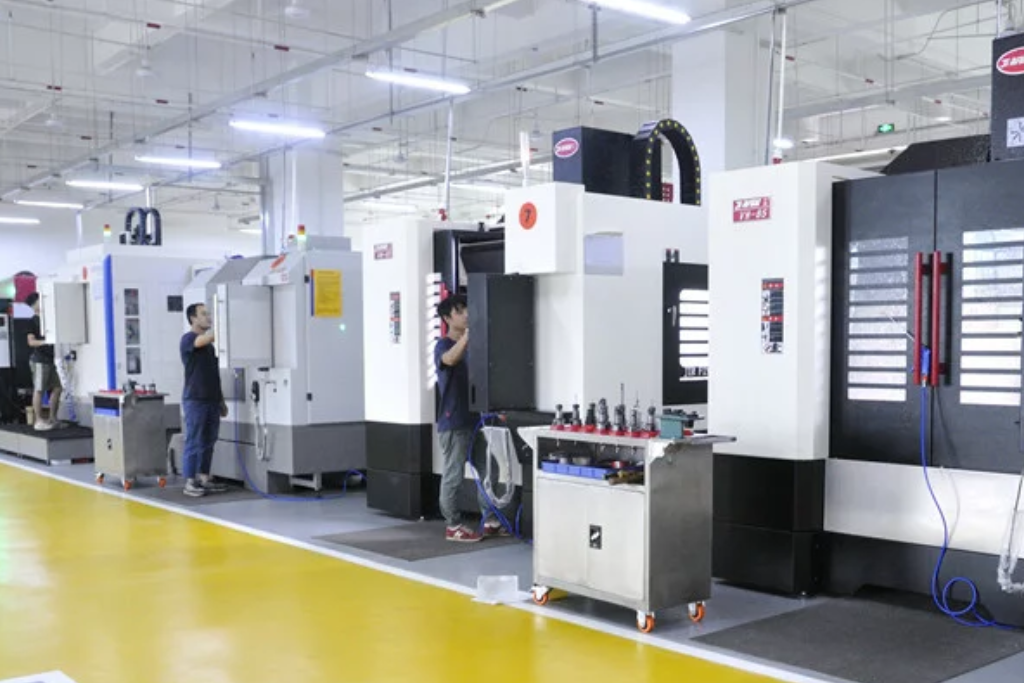
The simulation process connects directly with precision machining because a digital design must be converted into a highly accurate mold structure. Modern mold factories commonly use CNC machining, electrical discharge machining (EDM), and surface finishing technologies to manufacture detailed mold cavities. These methods can create fine textures, complex corners, and small functional structures that support advanced plastic product designs.
A reliable injection mold usually contains several carefully engineered sections:
| Mold Component | Function | Typical Requirement |
|---|---|---|
| Core and cavity | Forms the plastic part shape | Micron-level surface accuracy |
| Cooling channels | Controls temperature during molding | Balanced heat removal |
| Runner system | Guides melted plastic flow | Stable material distribution |
| Ejection system | Removes finished parts | Prevents deformation |
The accuracy of these components determines whether a complex product can be manufactured repeatedly. For example, medical housings, electronic connectors, and automotive interior parts often require dimensional control within 0.05 mm or tighter. A small mold error may affect assembly performance when thousands or millions of parts are produced.
Material selection also influences how complex plastic designs are manufactured. Different polymers behave differently during injection because they have different melting temperatures, shrinkage rates, and mechanical properties. Engineers select materials based on strength, temperature resistance, chemical exposure, and product usage conditions.
| Plastic Material | Main Features | Common Uses |
|---|---|---|
| ABS | Impact resistance and easy processing | Electronics covers, consumer products |
| Polycarbonate (PC) | High strength and transparency | Safety parts, medical components |
| Nylon (PA) | Wear resistance and durability | Mechanical parts, gears |
| POM | Low friction and dimensional stability | Precision moving components |
After material selection, mold structure optimization becomes necessary because each polymer requires different processing conditions. For instance, glass-filled nylon may require stronger mold steel due to its abrasive properties, while transparent polycarbonate parts require excellent cavity polishing to maintain optical quality.
Advanced molding technologies allow manufacturers to create designs that combine multiple functions in one part. Insert molding places metal or other components inside plastic parts during production, reducing the need for separate assembly processes. Overmolding combines different materials, such as rigid plastic and soft rubber, to improve grip, sealing, or comfort.
Multi-material molding has expanded design possibilities since the 1990s and continues to be used in automotive controls, medical tools, and electronic devices. In some applications, integrating multiple functions into one molded component can reduce part numbers by 20%–40%, lowering assembly time and improving product consistency.
Modern injection molding allows designers to create parts that were previously made from several separate components.
Cooling system design is another factor affecting complex plastic production. During injection molding, uneven cooling can cause warping, shrinkage differences, and surface defects. Advanced molds use optimized cooling channel layouts to maintain more consistent temperatures throughout the cavity.
Research published in manufacturing engineering fields has shown that improved cooling designs can shorten molding cycle times by approximately 10%–30% depending on part size and material type. Faster cooling improves production efficiency while maintaining dimensional accuracy, especially for high-volume manufacturing projects.
For companies developing complicated plastic products, choosing an experienced supplier is important because mold quality affects the entire production process. A professional Qlution Plastic Injection Molding Manufacturer provides support from product design analysis to mold production and testing. This approach helps manufacturers evaluate whether a design is suitable for injection molding before large-scale production begins.
Quality inspection is performed throughout mold manufacturing and product testing. Coordinate measuring machines (CMM), surface measurement equipment, and trial molding evaluations are commonly used to verify mold accuracy. In many industries, manufacturers perform multiple inspection stages because injection molds may need to operate for hundreds of thousands or even millions of cycles.
Typical quality checks include:
-
Dimensional measurement of mold components
-
Plastic part tolerance testing
-
Surface finish inspection
-
Mold trial evaluation
-
Assembly compatibility testing
These inspections help ensure that complex plastic parts maintain consistent quality during mass production. For industries such as medical equipment and automotive manufacturing, strict quality control is often required because components may need to meet industry standards established over many years.
The production lifespan of an injection mold depends on material choice, maintenance, and manufacturing conditions. Hardened steel molds can often support more than 500,000 production cycles, while high-quality molds used for automotive applications may exceed 1 million cycles with proper maintenance. Mold maintenance schedules usually include cleaning, lubrication, wear inspection, and replacement of damaged components.
Complex plastic designs also benefit from lightweight engineering. Many manufacturers replace metal components with reinforced plastic parts to reduce weight and production costs. In automotive applications, lightweight plastic components can contribute to vehicle weight reduction, while electronic manufacturers use compact molded parts to create smaller and thinner devices.
The connection between product design and mold engineering continues to influence how companies develop new products. Designers can create more detailed shapes, but successful production requires cooperation between CAD designers, material engineers, and mold specialists. Early mold evaluation can reduce redesign requirements and shorten development periods.
Precision injection molding gives manufacturers more freedom to create detailed plastic products while maintaining repeatable production quality.
Qlution Injection Mold supports complex plastic design development through accurate tooling, engineering analysis, advanced molding methods, and controlled manufacturing processes. These capabilities allow companies to produce reliable plastic components with detailed structures, improved functionality, and efficient large-scale production.